
1. COVID €4 Trillion ‘Money Printing’ Fiasco
When COVID struck, the European Central Bank created around four trillion euros in so-called relief, and all done with a few simple keystrokes. (Does that raise some minor concerns about the planned new Central Bank Digital Currency?) This money flowed into government coffers through bond purchases by the ECB. It was meant to sustain wages, health systems, furloughs, business loans, and economic survival. In reality, most of it never reached ordinary people. Nearly eighty percent went to corporations, banks, and state institutions, and only a fraction supported unemployment payments or wage subsidies.
If you were an autónomo in Spain, the story gets even more disparaging. In the majority of cases, you received no support, and were also forced to continue paying social security and income tax even while unemployed! Brutal, to say the least. The government’s protection net saved major employers and banks but left private workers exposed.
This flood of digital money had another predictable outcome. Too much money chased too few goods at a time when many supply chains collapsed. Inflation soared across Europe, and still continues today. In Spain, it means higher rent, food, energy, transport, clothing, consumer goods, etc. Families who already struggled with low wages experienced a huge decline in the value of their money.

2. Real Estate Speculation and Policies That Favour Corporations
While media and much of Spanish public opinion seems fixated on foreigners who buy homes in Spain, corporations have quietly taken control of a large share of Spain’s real estate market. Over one million homes in the last fifteen years have been acquired by companies! This represents about twelve percent of all property sales. And you will be interested to know that 60% of these purchases were in coastal regions with already stressed housing markets, including Catalonia, Valencia, Andalusia, Murcia, and the Balearic Islands.
These purchases are rarely isolated. Large investment funds, corporate landlords, and real estate trusts buy in bulk. They often purchase thousands of units in the same year, absorbing entire developments and apartment blocks as long-term assets, and thereby manufacture scarcity in the local real estate market. Rental prices increase (already exacerbated by inflation), and the gap to owning one’s own property increases again. In addition, the Spanish government offers these same corporations tax advantages not available to privates. Many wealthy individuals will often structure purchases through companies to obtain these same benefits.
Meanwhile, the private individual or family face restrictions and tighter regulations, particularly when they try to rent out their homes for short stays. To make matters worse, corporations now appear positioned to dominate Spain’s vacation rental market. For a deeper look, see our article: Concerning Shift of Tourism Licenses from Private Owners to Large Corporate Control.




3. High Taxes and a Low Commitment to Housing
Spain’s government (both left and right) have spoken much about housing solutions and delivered very little. In 2024 two hundred thousand public homes were promised. At year’s end, only three hundred and fifty had been completed. At the same time, regional and local governments collect on average ten percent tax of every property sale (more in certain regions like Valencia and Cataluña). The amount of public housing that could be built with that money is staggering! The question many citizens ask is simple: where is the money going?
In many urbanisations, residents still rely on septic tanks because sewage networks were never installed. Stormwater drains are absent. Roads in residential areas often go uncleaned or unrepaired for years. Municipalities rarely invest in affordable housing or in infrastructure that matches the taxes they collect. And still the yearly IBI (local municipal taxes) that households pay continues to rise!
Residents are not asking for gifts, they want transparency and accountability for their contributions, and a return in the form of housing, services, and public projects.

4. Education and Skills That Fail to Match the Economy
Along Spain’s coasts, much of the economy is international. Foreign residents and tourists don’t only spend on property but also on renovations, furniture, trades, healthcare, consumer goods, and leisure. This ecosystem could provide strong opportunities for locals if the education system would prepare them for it.
Instead, in places like Valencia and Cataluña, schools devote more time to regional languages than to international ones such as English, German, or French. These are the languages that employers in hospitality, real estate, and international trade require. At the same time, schools neglect digital skills, and entrepreneurship.
Spanish students often graduate without the tools to participate or compete in this international market that surrounds them. Valuable jobs go unclaimed by locals, and opportunities are missed to improve their wages and purchasing power. This is not a cultural issue but a practical one. To thrive, Spain will need to modernise education and vocational training so that young people can compete effectively.

Bureaucratic Theatre
5. Taxes Redirected to Illegal Immigration Instead of Spanish Citizens in Need
The Canary Islands, Andalusia, and the enclaves of Ceuta and Melilla record huge numbers of arrivals each year, and many from economically stable countries with strong GDPs like Morocco and Algeria. To process, house, provide medical care, and welfare for these arrivals costs hundreds of millions annually. This money comes from the taxes that Spanish families pay while the same waits for affordable homes or timely medical care.
Pensioners who worked for decades often receive less support than newcomers who just arrived. Young Spanish couples struggle to secure a house or start a family while their tax money is directed towards illegal immigration.
It is fine if those in the Government want to act like philanthropists, but real philanthropy would mean using their own salaries. Taking money from citizens who are themselves in need, only to give it to others, is not generosity. It is bureaucratic theatre, a contradiction carefully disguised as compassion.
The political class in Spain seems to be more interested in satisfying EU immigration requirements by Brussels than their own people’s needs.
Final Thoughts
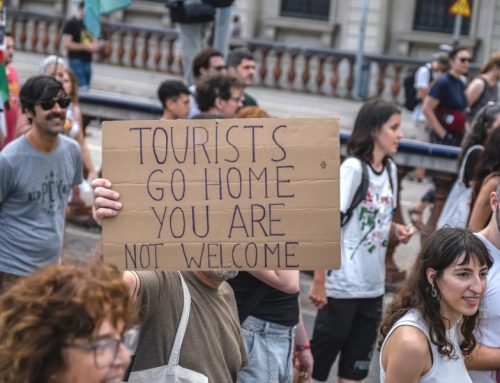
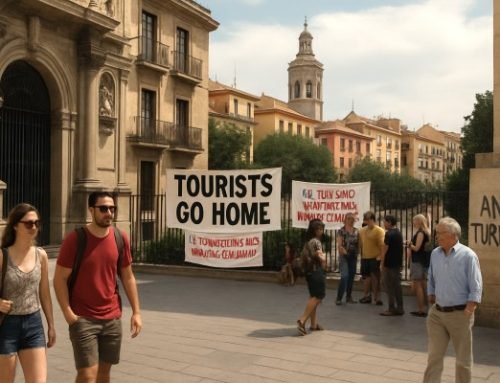
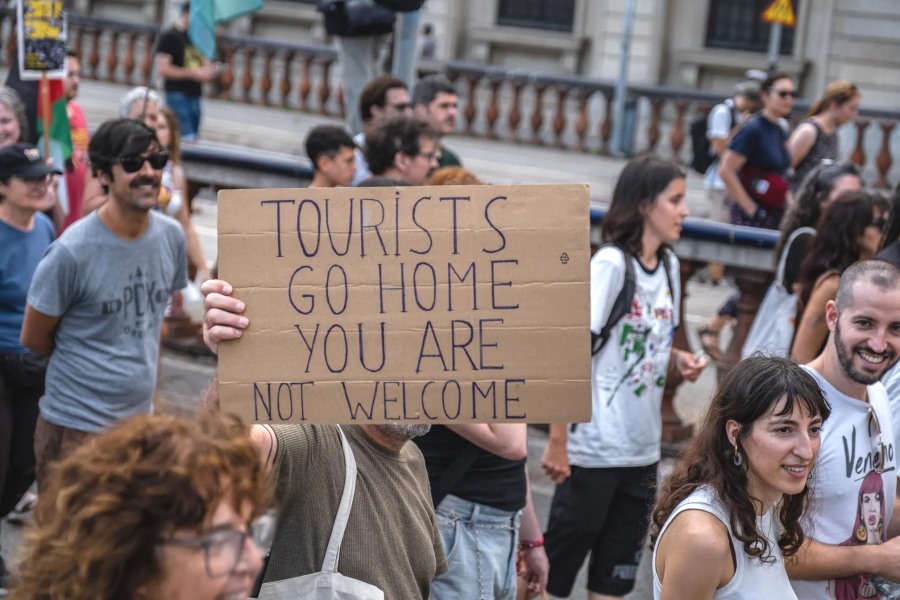
To label Spain’s crisis as the result of tourists and foreign buyers – the same people who add many billions of Euros to the Spanish economy each year – is a serious misrepresentation of reality. We have lived the outcome of vast digital money creation, corporate real estate speculation, high taxes without accountability, education that fails to prepare citizens for international markets, and tax funnels that ignore citizens. Unless long-term reforms address housing, skills, and fiscal responsibility, the narrative will continue to focus on tourists and foreigners while the real causes remain unaddressed.